Daylight Hours
Functions & Equations
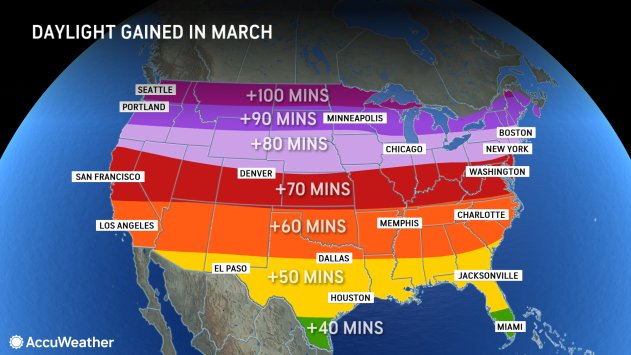
There are many ways to explore trigonometry in this classic problem
Introduction
The Earth's rotation gives us day and night, but the length of daylight varies dramatically throughout the year depending on where you live. This classic problem becomes even more interesting when you consider other planets - imagine if Earth rotated as slowly as Venus, where one day lasts 247 Earth days! You can model these patterns using trigonometric functions and explore how planetary motion affects our perception of time.
Guiding Questions
- Look up sunrise and sunset times for your town across a year. Plot day length against the date.
- Fit a sinusoidal model. What are the amplitude and midline, and what do they mean here?
- How well does the model fit near the solstices versus the equinoxes? Examine the residuals.
- Compare with a city at a very different latitude. Which parameter changes most, and why?
- Where does the model break down completely? Investigate what happens to day length very close to the poles, where a simple sinusoidal pattern stops describing reality.