Coordinating a Robot Army
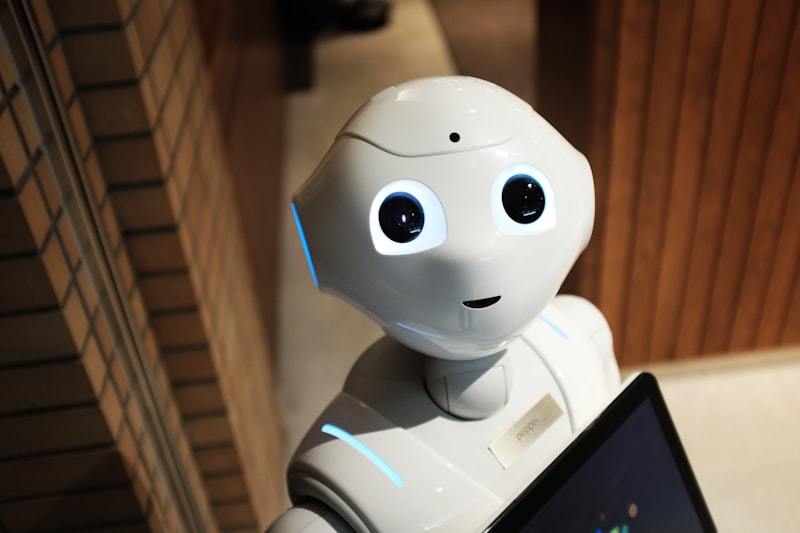
How do you program hundreds of identical robots to move in perfect synchronisation without crashing into each other? Explore the mathematics behind cluster cooperative scheduling.
Where this idea comes from
Start here — this is the source that inspired this exploration.
Introduction
At the 2025 Spring Festival Gala, hundreds of identical Unitree 'Kung Fu Bot' robots performed a perfectly choreographed routine. Each robot needed to know exactly where to be, when to be there, and how to get there without colliding with its neighbours. This is a real-world application of coordinate geometry, matrices, and parametric equations. Students will explore how the position of each robot can be described as a function of time, how transformations can generate formation changes, and how scheduling algorithms ensure collision-free paths. The mathematics of swarm coordination connects linear algebra, optimisation, and computational geometry.
Guiding Questions
- How would you describe each robot's position as a function of time?
- What transformation matrices could describe a formation change (e.g., line to circle)?
- How can you ensure no two robots occupy the same point at the same time?
- What is the minimum information each robot needs to perform its role?
- How does the complexity scale as you add more robots?