Moon Caves
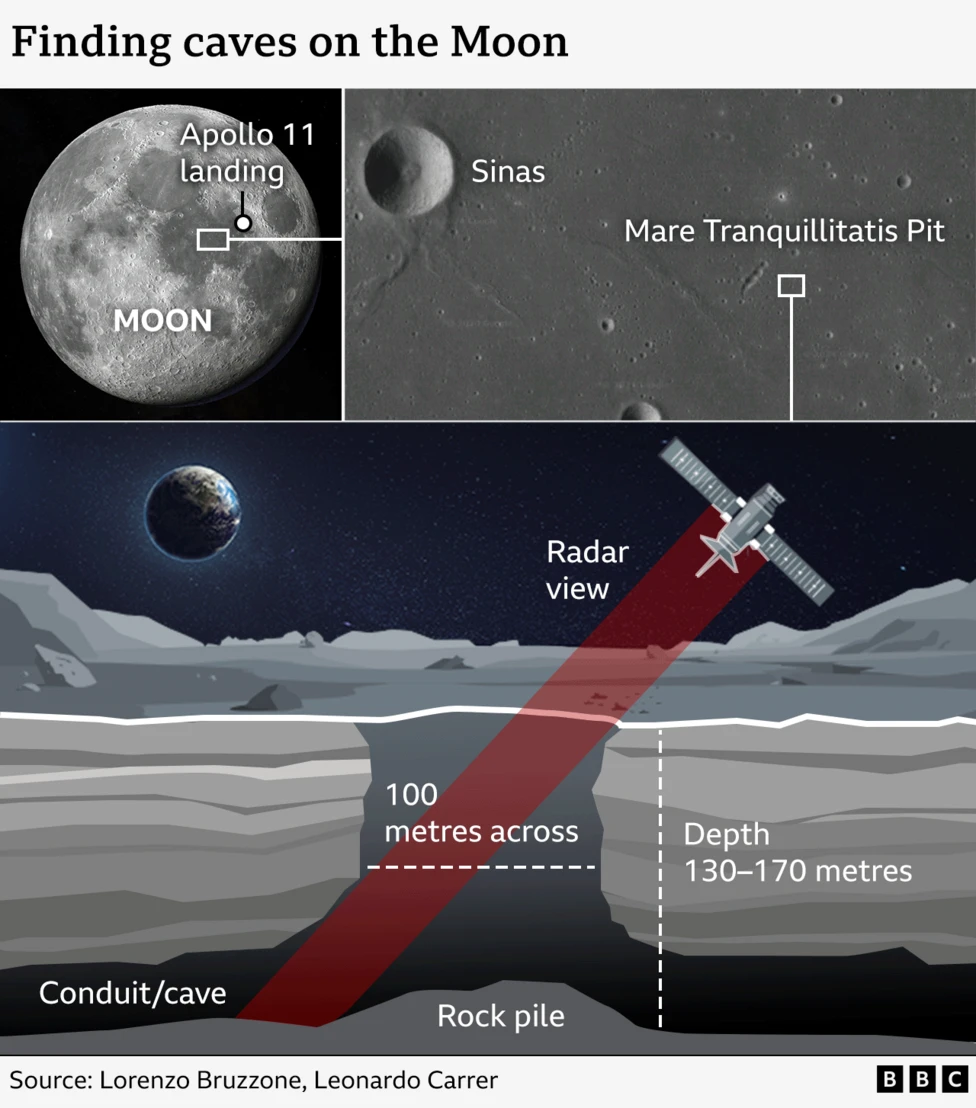
Lunar caves (lava tubes) have been located by measuring how the surface temperature above them differs from the surrounding rock. This idea estimates the size, volume and shelter capacity of one such cave from photographs and measurements.
Where this idea comes from
Start here — this is the source that inspired this exploration.
Introduction
Scientists have identified likely lunar lava tubes by measuring surface temperature: rock above a hollow cave heats and cools differently than solid rock, producing a detectable temperature anomaly from orbit. Once a cave's rough location and opening are known, its shape can be estimated using simple 3D solids: a cylinder or part-sphere for the tube, an ellipse or circle for the opening. This exploration builds that estimate from photographs and published measurements, and checks how sensitive the result is to the assumptions made.
Guiding Questions
- Scientists found lunar caves from how the ground temperature varies. What shape and volume might such a cave have?
- Model the cave opening as a circle or ellipse — how do you estimate its area from photographs taken at an angle?
- Estimate the volume of a lava tube using solids you know (cylinders, part-spheres). How sensitive is your estimate to the assumptions?
- How would you estimate how many people could shelter inside, and what does that depend on?