Why Won't My Phone Charge the Last 20%?
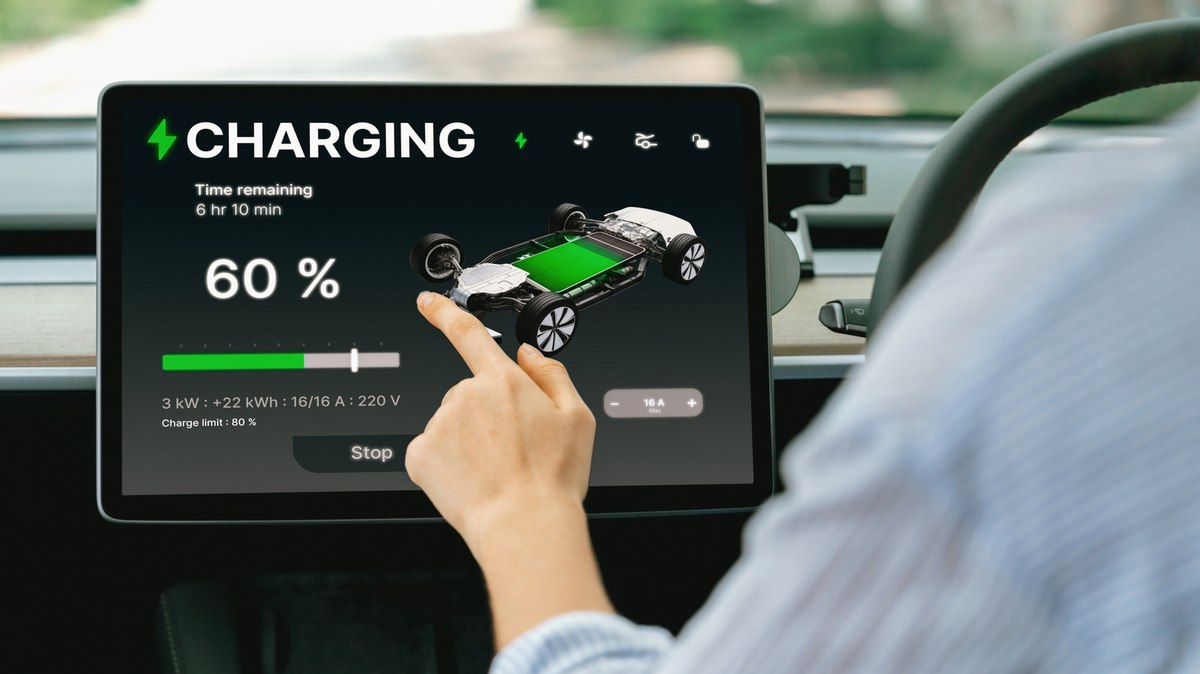
Charging races to 80% and then crawls. Collect your own phone's charging data tonight, find the rule behind the curve, and predict it one step at a time.
Where this idea comes from
Start here — this is the source that inspired this exploration.
Introduction
Plug in your phone and write down the battery percentage every five minutes — that's the whole experiment. The data shows fast charging at first, then a long crawl to 100%. Hidden in your readings is the rule that causes that shape, and you can dig it out yourself: the battery's gain in each five minutes is not constant, and working out what the gain depends on is the first discovery. Once you have the rule, you can use it to predict the whole charge — one step at a time — and test your prediction against the phone. The same kind of rule describes cooling drinks, filling reservoirs and plastic building up in the ocean.
Guiding Questions
- Collect the data: charge your phone from low and record the percentage every five minutes, right up to 100%.
- Add a column for the GAIN in each five-minute interval. When is the gain biggest, and when smallest? What does the gain seem to depend on?
- Test your hunch with a graph: plot each interval's gain against the quantity you suspect drives it. Look at the early part of the charge and the later part separately — does one straight line fit both, or does the pattern change partway through? If it changes, mark roughly where, and think about what's different about the charger's behaviour before and after that point.
- For each phase you found, write a rule for getting from one reading to the next. Use those rules to predict the whole charging curve from just your first reading, and lay the prediction over the real data.
- Your rule makes assumptions. Change one — your choice — and test whether your phone agrees.
- The same gain-depends-on-what-remains structure models bathtubs, caffeine in your body and ocean plastic. Pick one, adapt your rule, and say what the 'battery percentage' has become.