Menu
Sign up Sign in
Year 9 Science Real substances

Real substances

The particle pictures show you how the atoms are arranged. These show the thing itself — sulfur's yellow, mercury beading, copper sulfate's blue. Sorted into the same five groups the questions use.

Simple elemental

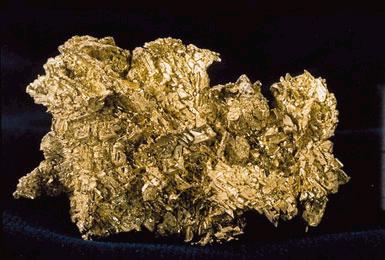
Gold

Gold Au

Where it comes fromUsually as the native metal, in rock seams and river gravel.

What we use it forJewellery, electrical contacts that must never corrode, and dentistry.

Why it is in this groupSo unreactive it is found uncombined. Still just one kind of atom.

GoldNuggetUSGOV.jpg · Public domain

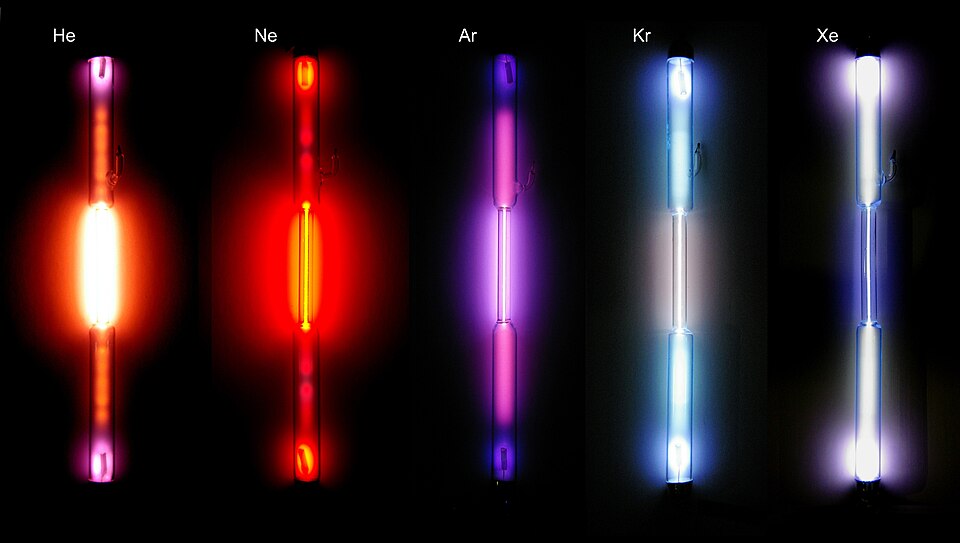
Helium

Helium He

Where it comes fromTrapped underground with natural gas, made by radioactive decay over millions of years.

What we use it forCooling the magnets in MRI scanners, leak testing, and balloons. The supply is genuinely finite.

Why it is in this groupThe full shell it is famous for. It has never been persuaded into a stable compound.

Angeregtes Helium 3.jpg · Alicepublic · CC BY-SA 4.0

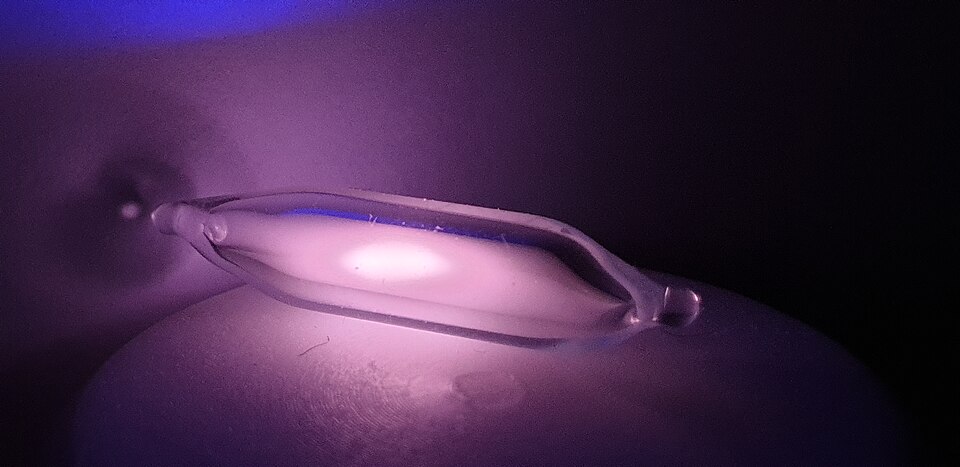
Neon

Neon Ne

Where it comes from0.0018% of the air, separated out by cooling air until it liquefies.

What we use it forThe orange-red glow in neon signs. Other sign colours are other gases, not neon.

Why it is in this groupIts outer shell is already full, so it has no reason to join anything.

Shinjuku-neon Tokyo.jpg · Michael Reeve · CC BY-SA 3.0

Molecular elemental

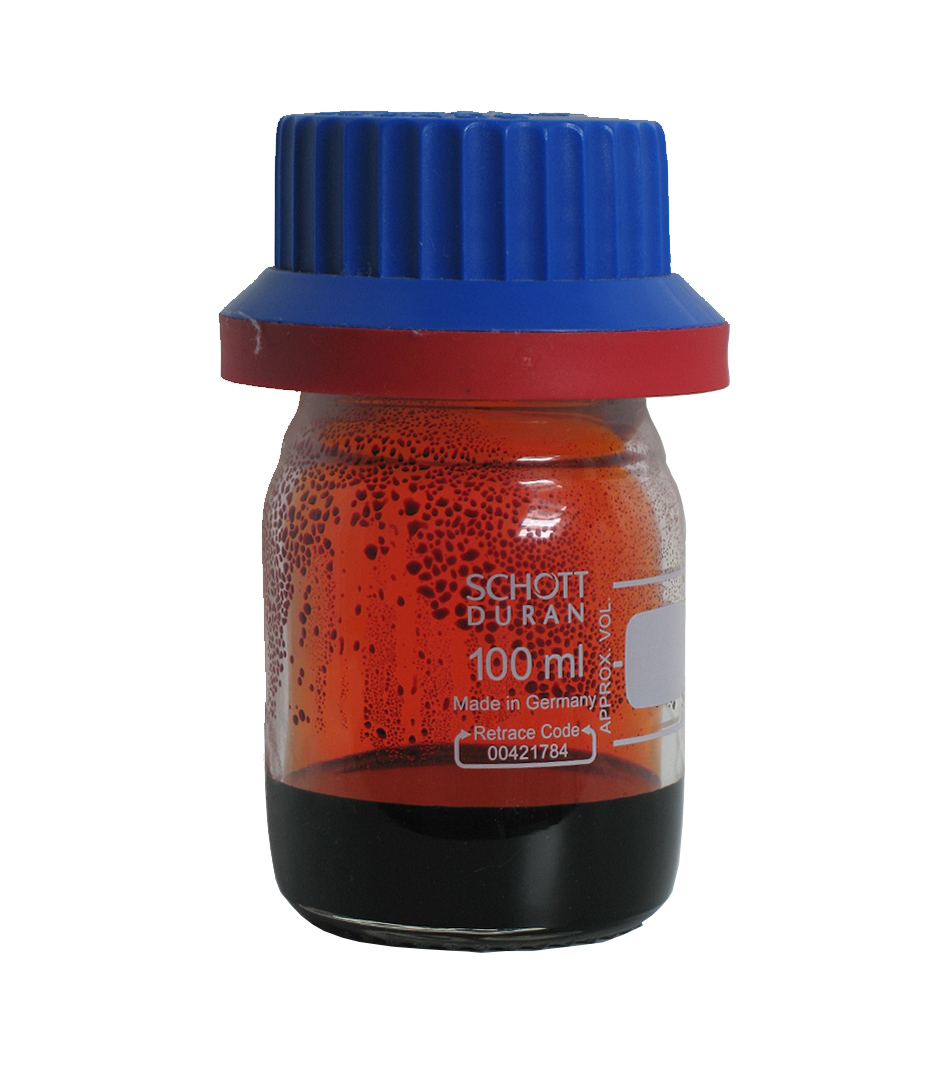
Bromine

Bromine Br2

Where it comes fromFrom seawater and underground brines.

What we use it forFlame retardants, and once the backbone of photographic film.

Why it is in this groupPairs again. One of only two elements that are liquid in a warm room.

Bromine 25ml.jpg · W. Oelen · CC BY-SA 3.0

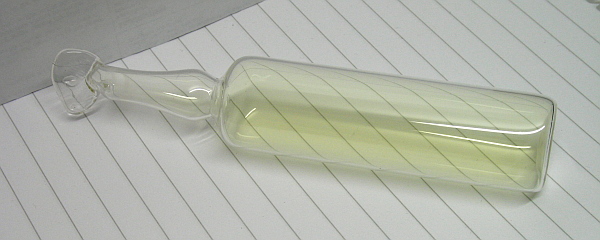
Chlorine

Chlorine Cl2

Where it comes fromMade from salt by electrolysis. A green-yellow gas, and toxic.

What we use it forTreating drinking water and pools, bleach, and PVC.

Why it is in this groupOne electron short each, so two atoms pair up and share.

Chlorine ampoule.jpg · W. Oelen · CC BY-SA 3.0

Nitrogen

Nitrogen N2

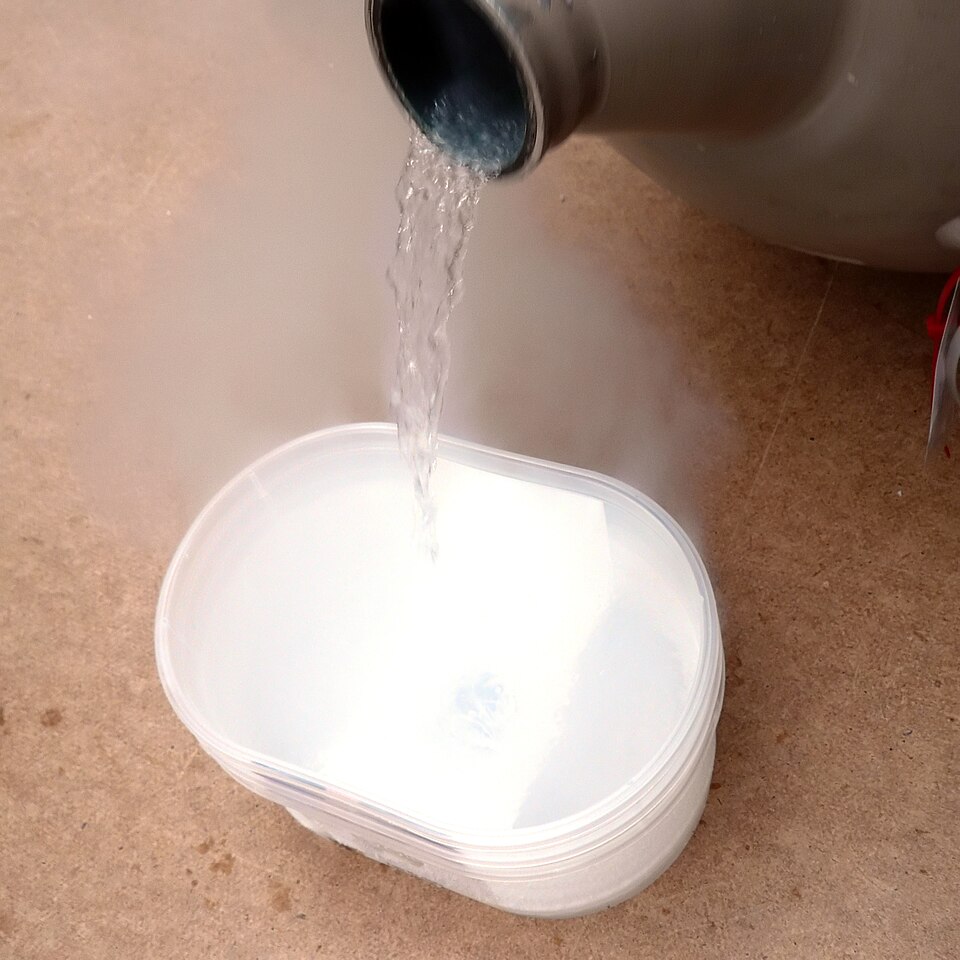
Where it comes from78% of the air. Boils at −196 °C, which is why it is the cheap way to get cold.

What we use it forFreezing food and biological samples, flushing crisp packets, and making ammonia for fertiliser.

Why it is in this groupA triple bond, and a very strong one — which is exactly why the bulk of the air is so unreactive.

Liquidnitrogen.jpg · Cory Doctorow aka gruntzoki on Flickr · CC BY-SA 2.0

Oxygen

Oxygen O2

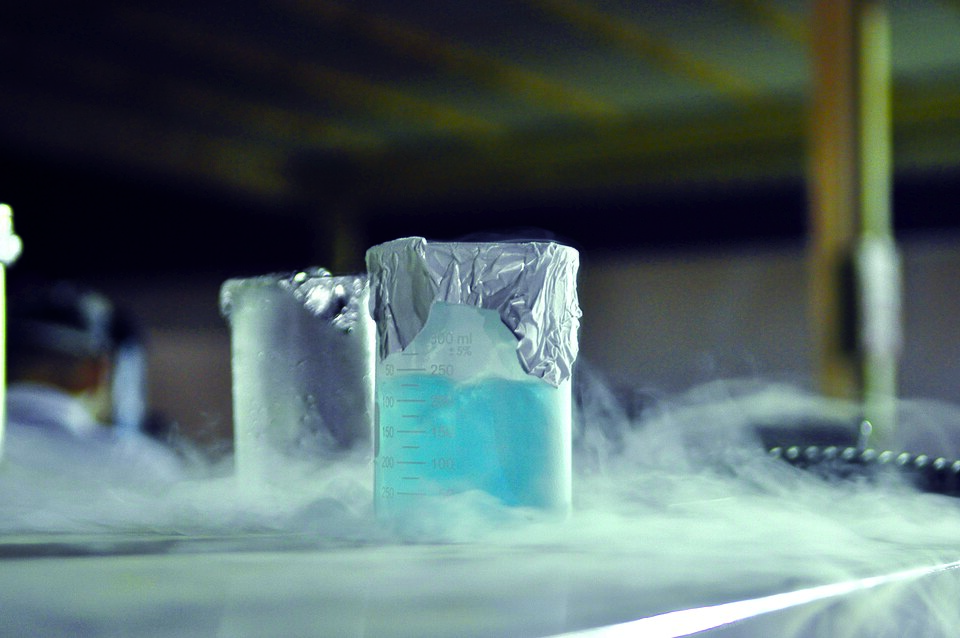
Where it comes from21% of the air. Liquid oxygen is a genuine pale blue.

What we use it forBreathing apparatus and hospitals, steel making, and welding torches.

Why it is in this groupTwo atoms share two pairs of electrons — a double bond.

Liquid oxygen in a beaker.jpg · Public domain

Ozone

Ozone O3

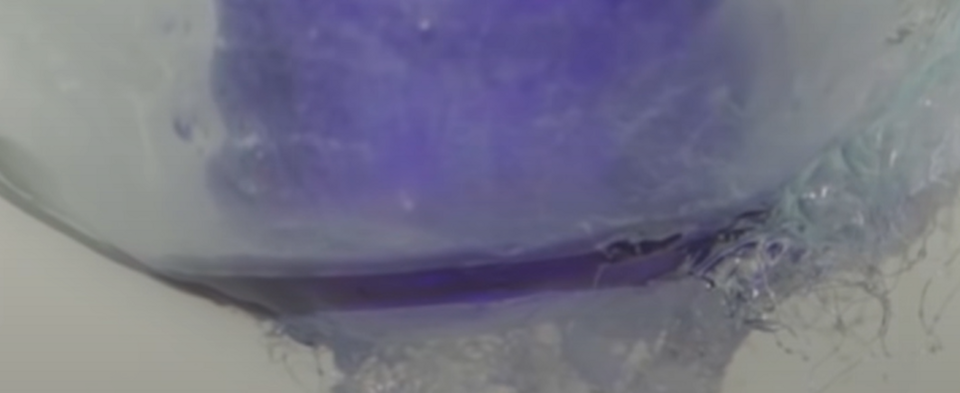
Where it comes fromMade when energy splits O2 and the pieces re-join in threes — by lightning, by a spark, or by UV high in the atmosphere.

What we use it forSterilising water, and the ozone layer that absorbs UV. Down at ground level it is a pollutant and harmful to breathe.

Why it is in this groupThree oxygen atoms joined together. Only one element is involved, so it is molecular elemental — not a compound.

Liquid ozone.png · ChemicalForce · CC BY-SA 4.0

Phosphorus

Phosphorus P4

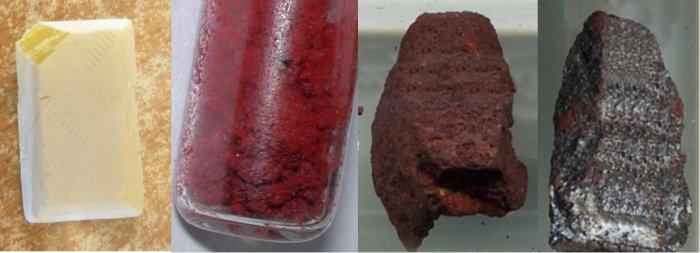
Where it comes fromMined as phosphate rock. The photo shows four different forms of the same element — white, red, violet and black.

What we use it forMatch heads, fertiliser, and detergents.

Why it is in this groupWhite phosphorus is P4: four atoms in a tiny pyramid, each joined to the other three. The red form is a long chain instead — same element, different arrangement.

PhosphComby.jpg · Weißer_Phosphor.JPG: BXXXD at German Wikipedia Phosphor_rot.jpg: Tomih · CC BY-SA 3.0

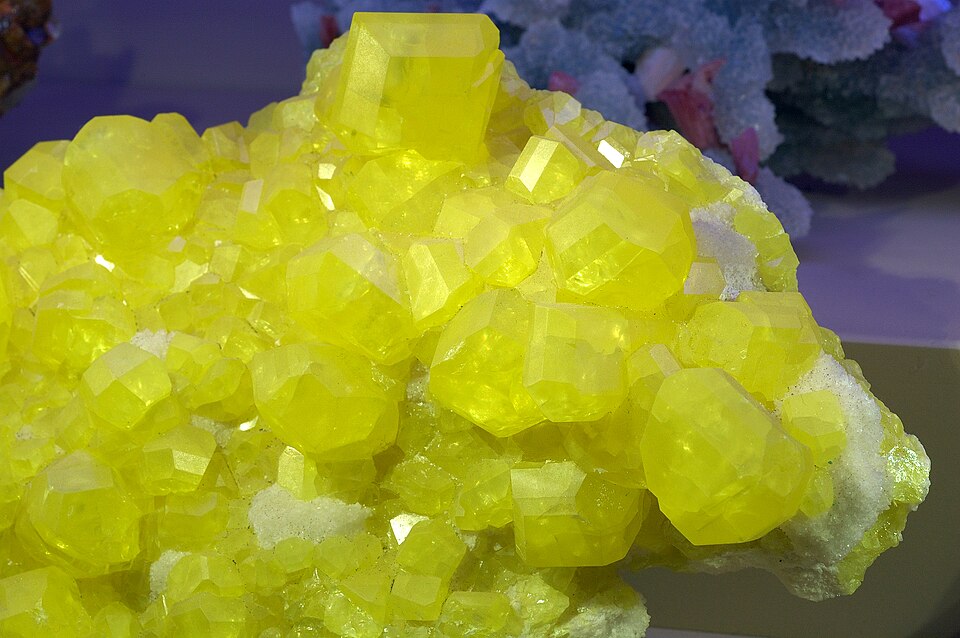
Sulphur

Sulphur S8

Where it comes fromVolcanic deposits, and stripped out of crude oil during refining.

What we use it forSulphuric acid — the most-produced industrial chemical there is — plus vulcanised rubber.

Why it is in this groupRings of eight atoms. Molecular, not simple, however solid it looks.

Large Sulfur Crystal.jpg · Eric Hunt · CC BY-SA 2.5

Compound

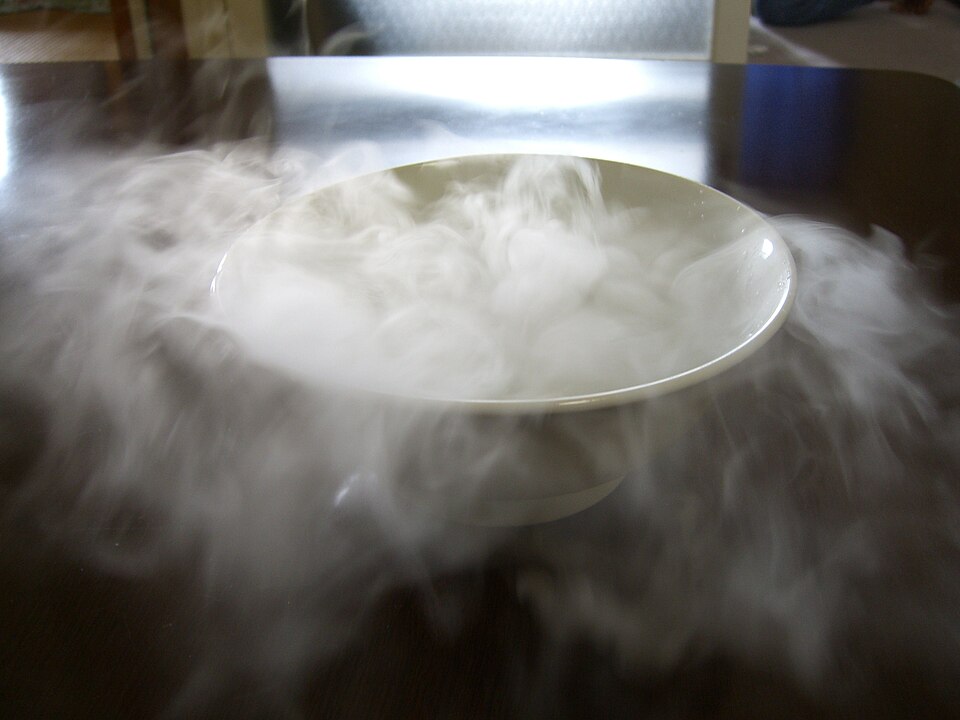
Carbon dioxide

Carbon dioxide CO2

Where it comes fromCarbon dioxide, cooled until it freezes at −78 °C.

What we use it forShipping frozen food and vaccines, and stage fog. It goes straight from solid to gas.

Why it is in this groupA compound: one carbon, two oxygens, every molecule identical.

DryIceSublimation.JPG · Public domain

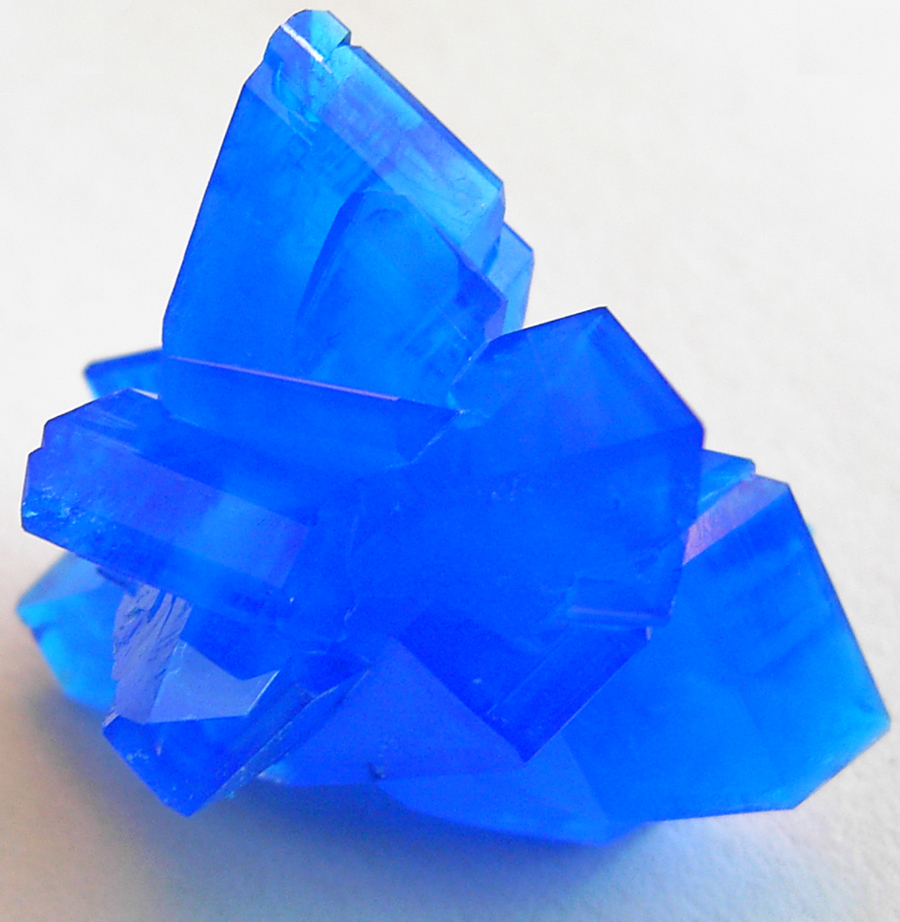
Copper sulphate

Copper sulphate CuSO4

Where it comes fromMade by reacting copper with sulphuric acid.

What we use it forFungicide on vines, electroplating, and the classic school crystal-growing experiment.

Why it is in this groupMade from copper, and blue. A compound keeps none of its ingredients' properties.

Copper sulfate.jpg · Stephanb · CC BY-SA 3.0

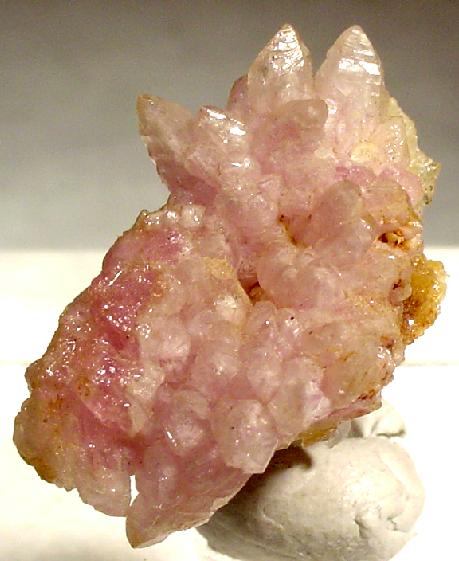
Quartz

Quartz SiO2

Where it comes fromThe commonest mineral in the crust. Most sand is mostly this.

What we use it forGlass, concrete, and the oscillator in a quartz watch.

Why it is in this groupSilicon and oxygen in a fixed ratio, joined right through.

Quartz-24612.jpg · Robert M. Lavinsky · CC BY-SA 3.0

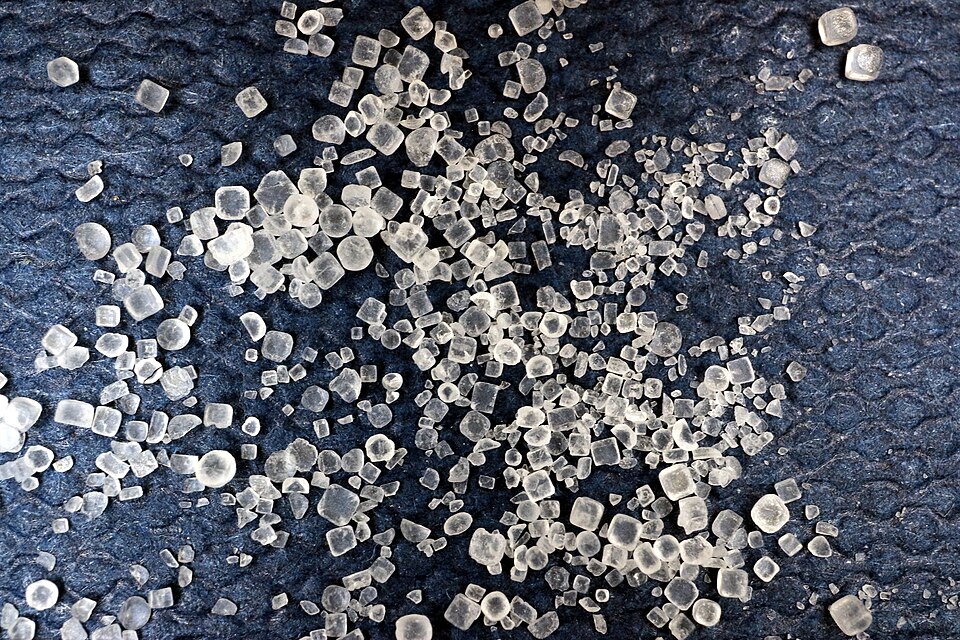
Salt

Salt NaCl

Where it comes fromEvaporated from seawater or mined as rock salt.

What we use it forFood, road de-icing, and the raw material for chlorine and sodium hydroxide.

Why it is in this groupSodium and chlorine in a fixed one-to-one pattern — and nothing like either on its own.

Salt Crystals macro.jpg · Prosthetic Head · CC BY-SA 4.0

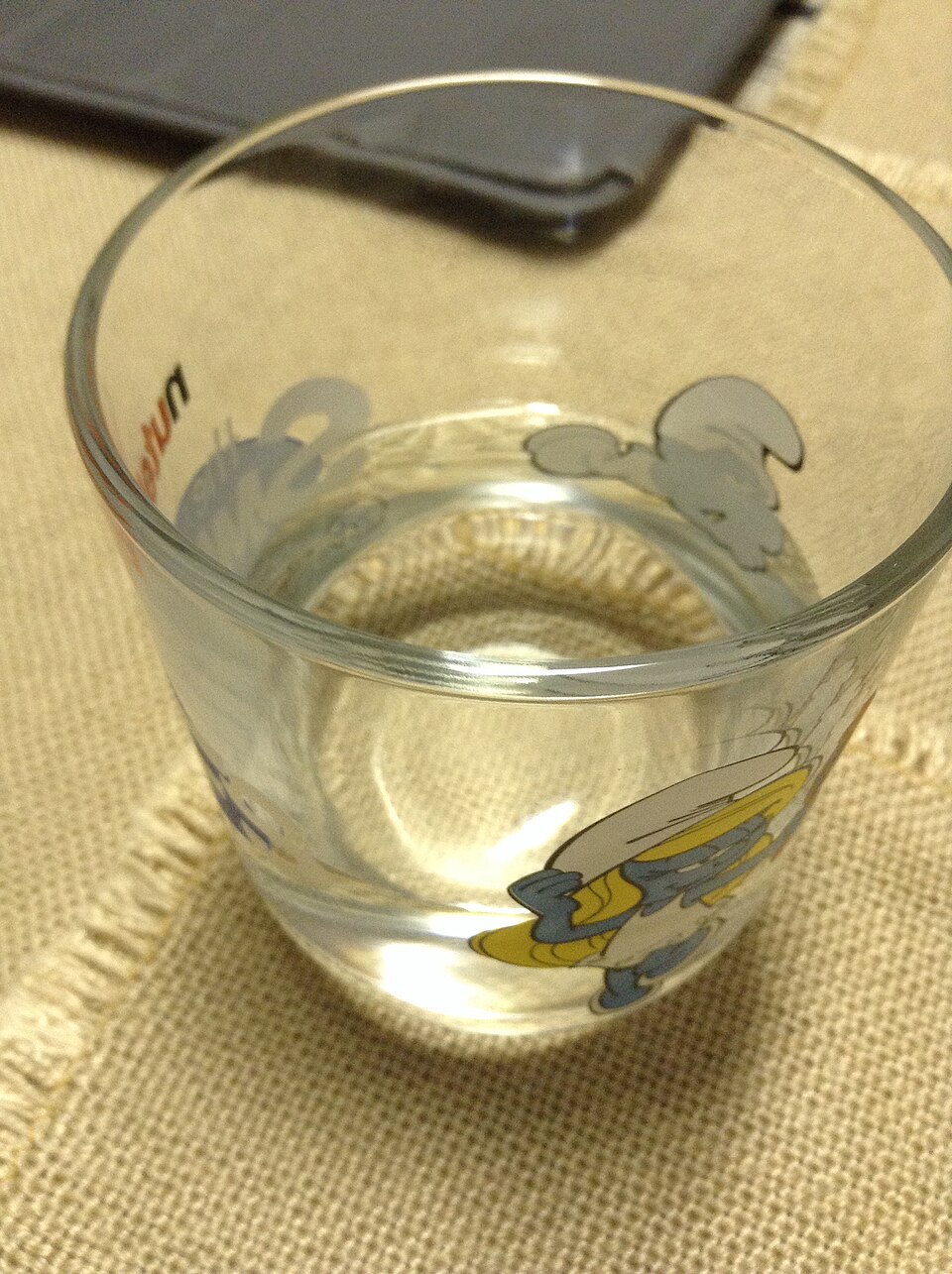
Water

Water H2O

Where it comes fromTwo-thirds of you, and most of the planet's surface.

What we use it forEverything. Also the standard against which we measure heat capacity.

Why it is in this groupTwo elements locked in a fixed ratio: always two hydrogens to one oxygen.

Glass of water.jpg · deavmi · CC BY-SA 4.0

Homogeneous mixture

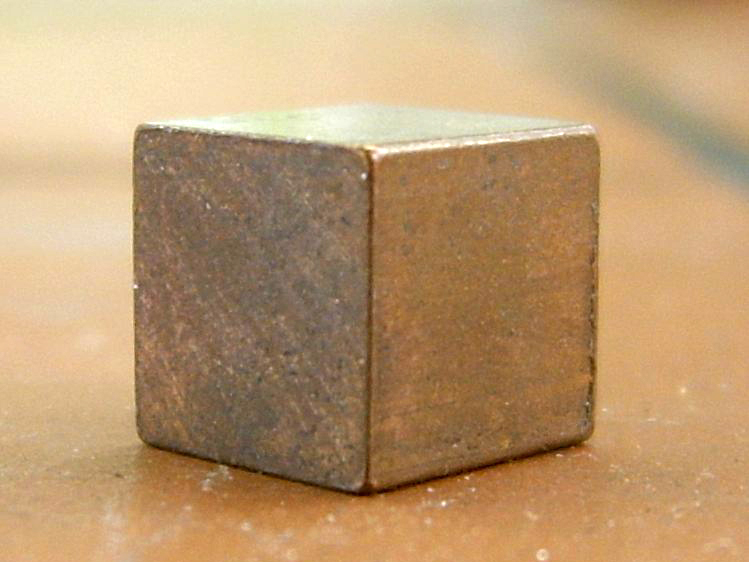
Brass

Brass

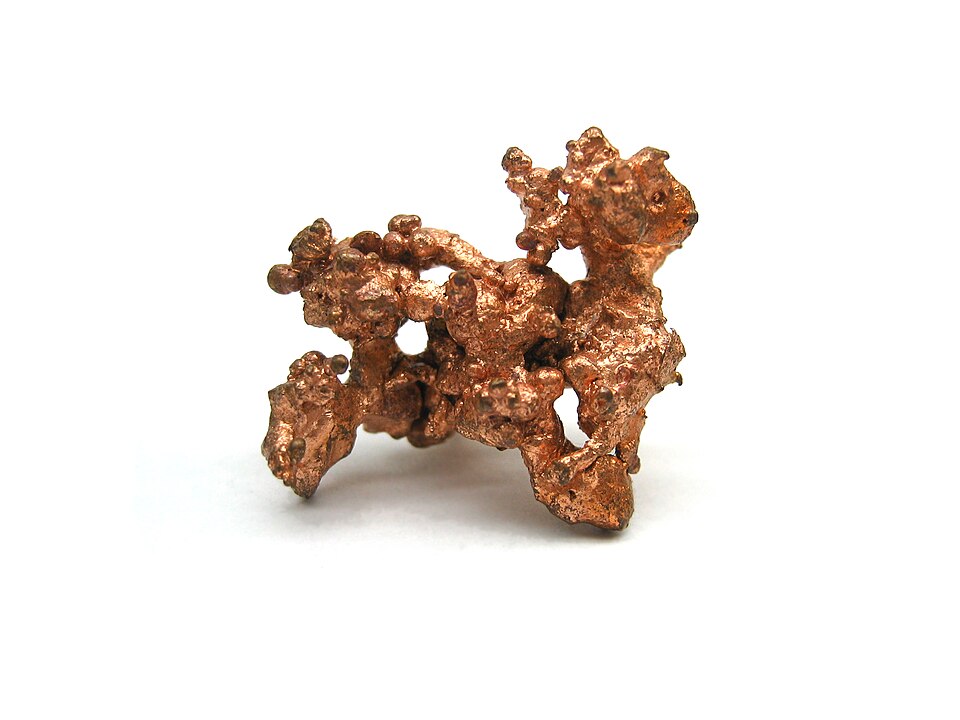
Where it comes fromMade deliberately by melting copper with zinc.

What we use it forInstruments, door handles, and fittings that must not spark.

Why it is in this groupAn alloy: two metals sharing a lattice in no fixed ratio, so still a mixture.

Metal cube brass.jpg · Public domain

Sea water

Sea water

Where it comes fromAround 3.5% dissolved salts, mostly sodium chloride.

What we use it forDesalination for drinking water, and evaporation ponds for salt.

Why it is in this groupEvenly mixed all the way through, so homogeneous — but the salt can be evaporated back out.

Sea water Virgo.jpg · Jyi1693 · CC BY 2.5

Heterogeneous mixture

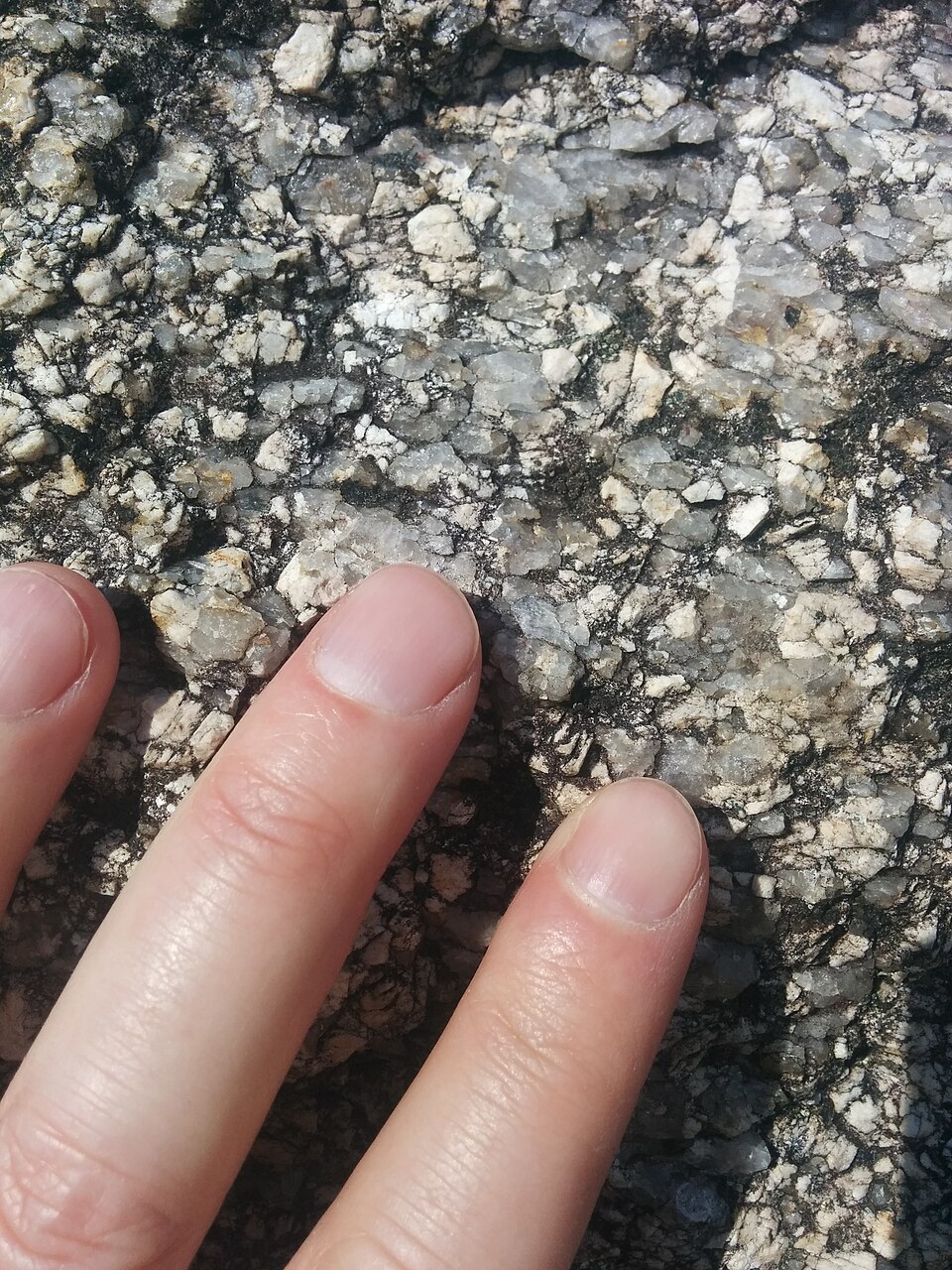
Granite

Granite

Where it comes fromCooled slowly deep underground, then exposed by erosion.

What we use it forWorktops, kerbstones, and buildings meant to last.

Why it is in this groupYou can see the separate minerals with your eyes. Nothing is joined between them.

Market Street erratic close up.jpg · Brianhe · CC BY-SA 4.0

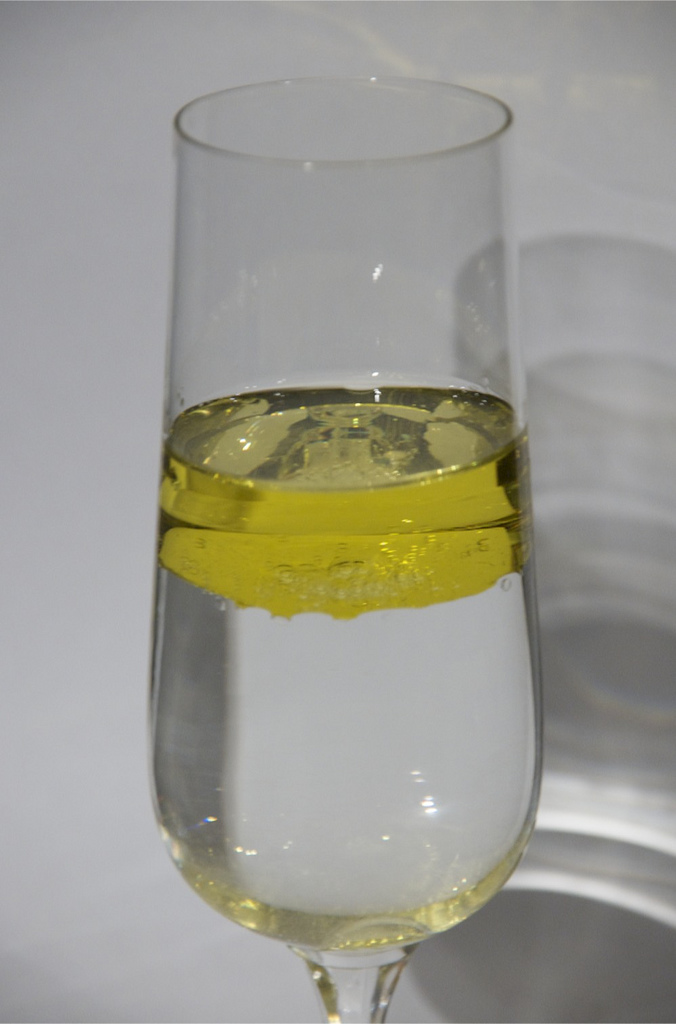
Oil and water

Oil and water

Where it comes fromAny kitchen. Shake it and it mixes; leave it and it separates.

What we use it forSalad dressing, and the reason detergents exist.

Why it is in this groupTwo liquids that will not dissolve in each other. Nothing has reacted, so it comes apart again.

Oil in water.jpg · User:Bitjungle · CC BY-SA 2.0

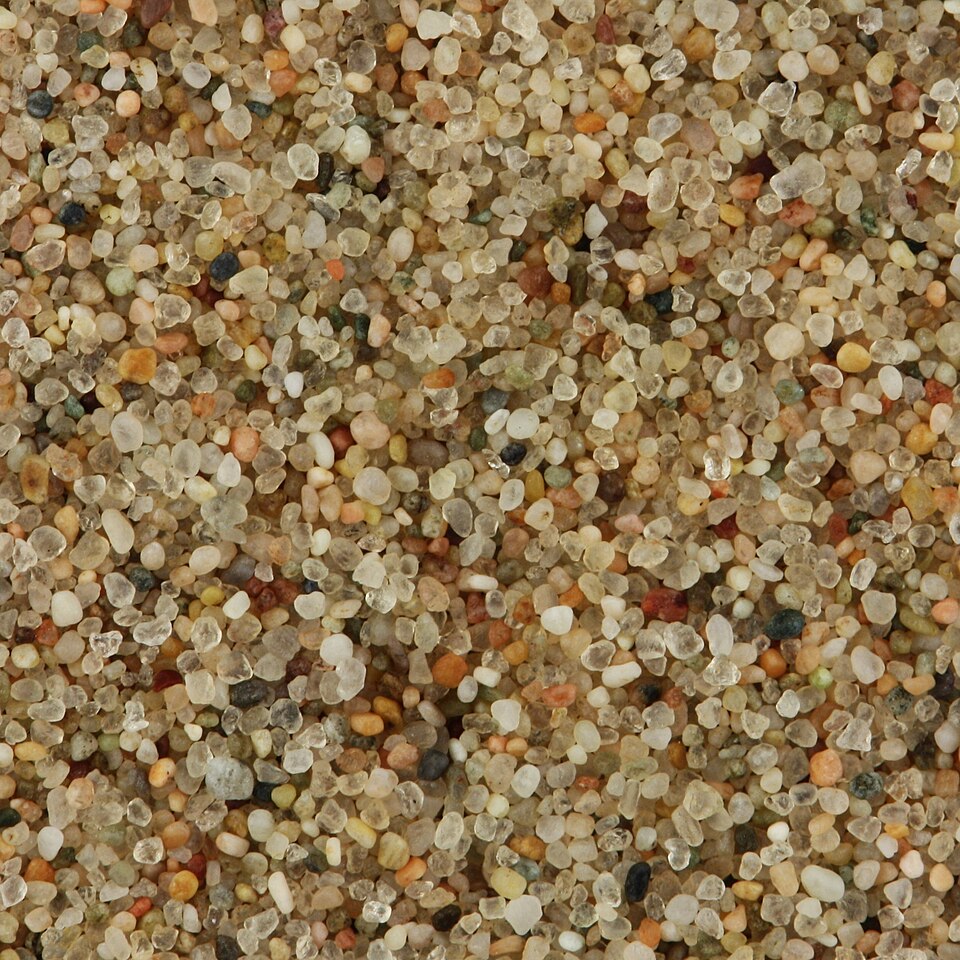
Sand in water

Sand in water

Where it comes fromBeaches, riverbeds, deserts.

What we use it forConcrete, glass, and filtration.

Why it is in this groupDifferent grains of different substances, in no fixed ratio. Separable one grain at a time.

Sand from Gobi Desert.jpg · Siim Sepp · CC BY-SA 3.0

Every photograph is freely licensed — CC BY, CC BY-SA, CC0, FAL or public domain — and credited under the picture. Keeping that credit is the whole condition of using them.