Resolving Forces: A Cyclist on a Hill
Geometry & Trigonometry
A cyclist climbing a hill pushes down at an angle to the road. Resolving that push into horizontal and vertical components explains why climbing feels harder as the slope increases.
Introduction
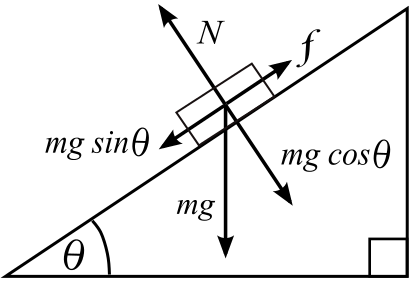
Any force acting at an angle can be split into horizontal and vertical components. For a cyclist riding up a slope, the force needed to keep moving depends on how gravity and the rider's weight resolve along and perpendicular to the road. The same idea explains why the angle of release matters in sports such as basketball free throws, shot put and diving: resolving the initial velocity into components determines both how far and how high the object travels.
Guiding Questions
- A cyclist rides up a slope of a chosen gradient. Resolve their weight into components along and perpendicular to the road. What force must the rider produce just to avoid rolling back?
- At what slope does the required force double compared with a flat road? Find the general relationship between gradient and force.
- Pick one sport (basketball, shot put or diving) and resolve the launch velocity into horizontal and vertical components at a chosen release angle.
- Measure or look up realistic values (speed, angle, rider mass) and check whether your model matches known data, for example a real climb such as Alpe d'Huez.