Cable-Stayed Bridge
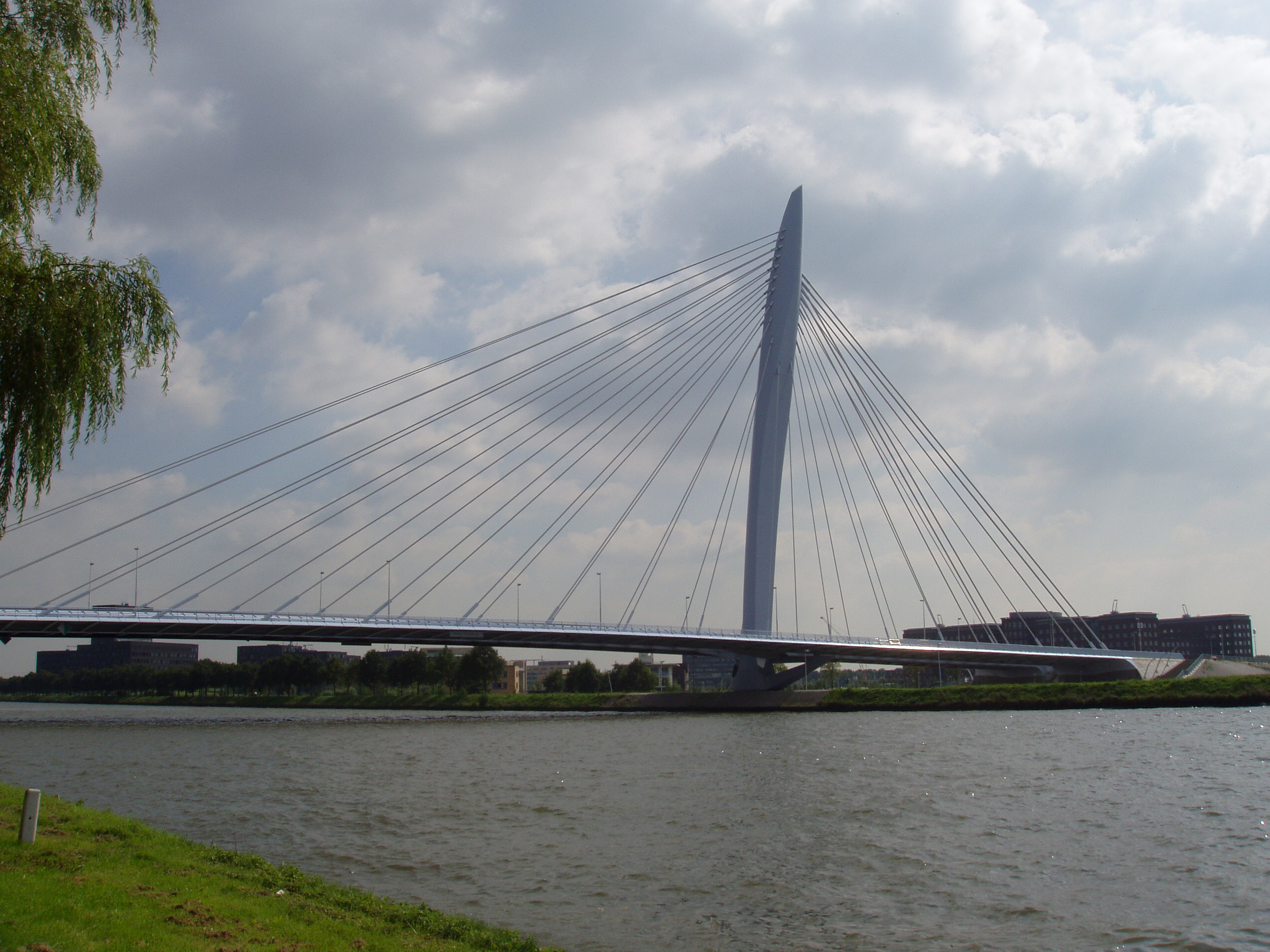
In a cable-stayed bridge, straight cables run directly from the towers to the deck, unlike the curved main cables of a suspension bridge. This idea uses trigonometry to find each cable's length, angle and tension.
Where this idea comes from
Start here — this is the source that inspired this exploration.
Introduction
A cable-stayed bridge supports its deck with cables that run in straight lines directly from one or more towers to points along the deck, in contrast to a suspension bridge, where the main cables hang in a curve and short vertical cables carry the load down to the deck. Because each stay cable is straight, its length and the angle it makes with the deck can be found directly from the coordinates of the tower and its attachment point. The tension needed in each cable depends on that angle: cables closer to horizontal must carry more force to support the same vertical load.
Guiding Questions
- In a cable-stayed bridge, what shape do the cables make, and how is that different from a suspension bridge?
- Set up coordinates for the tower and deck. What are the lengths and angles of each cable?
- How does cable tension relate to the angle it makes with the deck? Which cables carry the most load?
- Find the total cable length for a real bridge and explore how moving the tower changes it.