Line Judge vs Replay: How Good Is the Human Eye?
Statistics & Probability
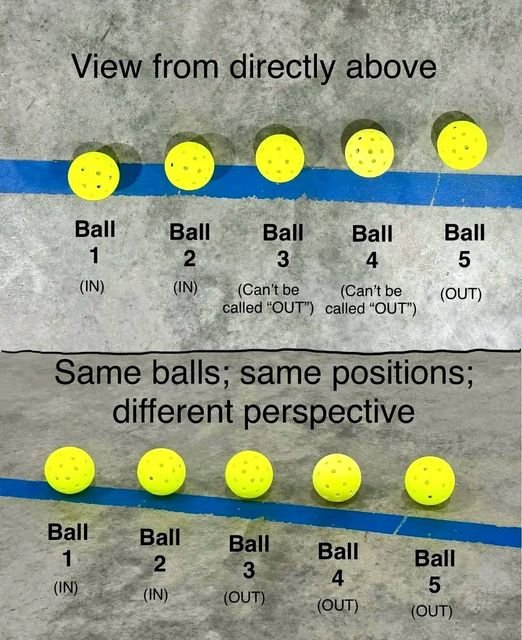
Slow-motion replay clips show many close line calls are wrong. Collect clips of close calls, make your own call before checking the verdict, and model how your accuracy depends on distance from the line.
Introduction
Officials call a ball in or out in real time, at full speed, from a fixed viewing angle. Slow-motion review technology exists because that call is hard to get right when the margin is small. This exploration turns you into the line judge: collect a set of close-call clips (tennis, cricket, football goal-line), record how far from the line the ball actually was where that information is available, make your own call before watching the verdict, and see how your accuracy changes as the margin shrinks.
Guiding Questions
- Collect a set of close-call clips with a known verdict. Before watching the slow-motion replay, make your own call from a single viewing angle. How often are you right?
- For each clip, estimate or find how far the ball was from the line. Plot your accuracy against that distance. Is there a distance beyond which your calls become reliable?
- Group your clips into distance bands and build a table of correct vs incorrect calls by band. Test whether accuracy depends on distance using a chi-squared test.
- Officials accept automated line-calling once its estimated error is under a published threshold. Using your own accuracy data, argue for or against a similar threshold for human judges.