VAR
Geometry & Trigonometry
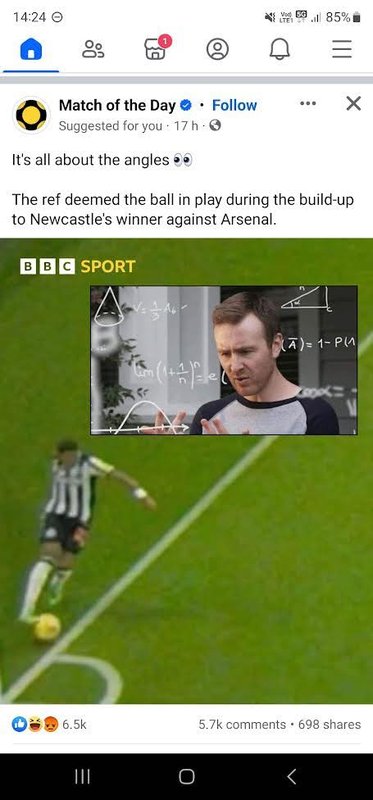
VAR offside lines look pixel-precise on screen. Model the real margin of error behind that precision and decide how close a call should be before doubt applies.
Introduction
VAR (Video Assistant Referee) offside decisions are made by drawing lines on a still video frame: one along the last defender, one through the attacker, both derived from pixel positions in a 2D camera image projected onto the 3D pitch. Camera angle, lens distortion and the exact video frame chosen all introduce uncertainty into where those lines actually fall, yet decisions are often shown to the public as if the margin were exact to the pixel. This exploration asks you to model that uncertainty and to judge how close a call needs to be before 'benefit of the doubt' should apply.
Guiding Questions
- A VAR offside decision draws lines on the pitch from a camera image. What geometry turns pixels into pitch positions?
- How does camera angle create uncertainty about where a player really is?
- Estimate the margin of error in an offside line from realistic camera parameters.
- Given that uncertainty, how close should a call be before 'the benefit of the doubt' applies? Argue with numbers.