How Fast Can You Fall?
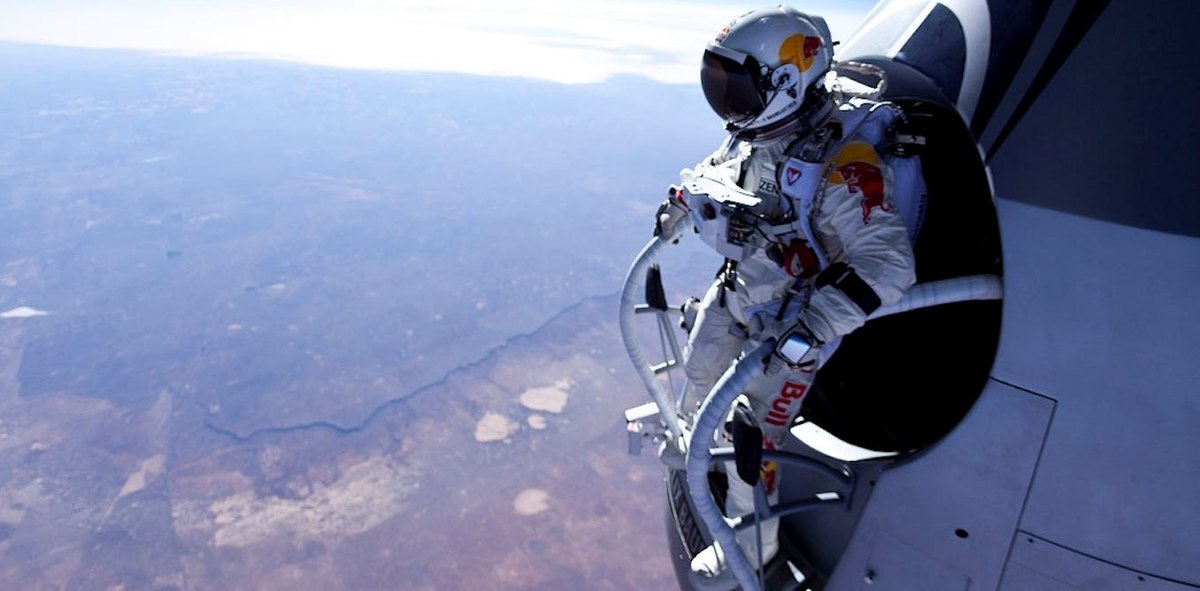
A skydiver doesn't speed up forever — the air pushes back harder the faster you go. There's no neat formula for this, so do what engineers do: predict the speed one small step at a time.
Where this idea comes from
Start here — these are the sources that inspired this exploration.
Introduction
Gravity pulls a skydiver down; air resistance pushes back, and the push grows with speed. At some point the two balance and the speed stops rising — terminal velocity. The rule for how speed changes is easy to write but has no simple formula for the answer, which is exactly when stepping forwards in time (a few seconds per step, in a spreadsheet) earns its keep. Felix Baumgartner's jump from 39 km is the perfect test case: he briefly fell faster than sound. Could your model explain why that was possible up there but impossible near the ground?
Guiding Questions
- Drop a paper cupcake case: it reaches a steady speed almost immediately. List everything pushing or pulling it, which way each acts, and what each one depends on.
- A skydiver's speed changes second by second. Using your list, write a rule for the speed one second from now in terms of the speed now. Which parts of your rule are constant, and which grow as they speed up?
- The air's push has to grow with speed — but how fast? Try out different ways it could grow, step each version forward in a spreadsheet, and see which produces a believable terminal velocity (skydivers level off near 200 km/h).
- Your steps are an approximation. Halve the step size, then halve it again — how much does the answer move, and when can you stop caring?
- Baumgartner hit 1,357 km/h at 39 km altitude, yet ordinary skydivers manage about 200 km/h. Something in your rule must be different up there — find it, change it, and see whether your model can reproduce his jump.